


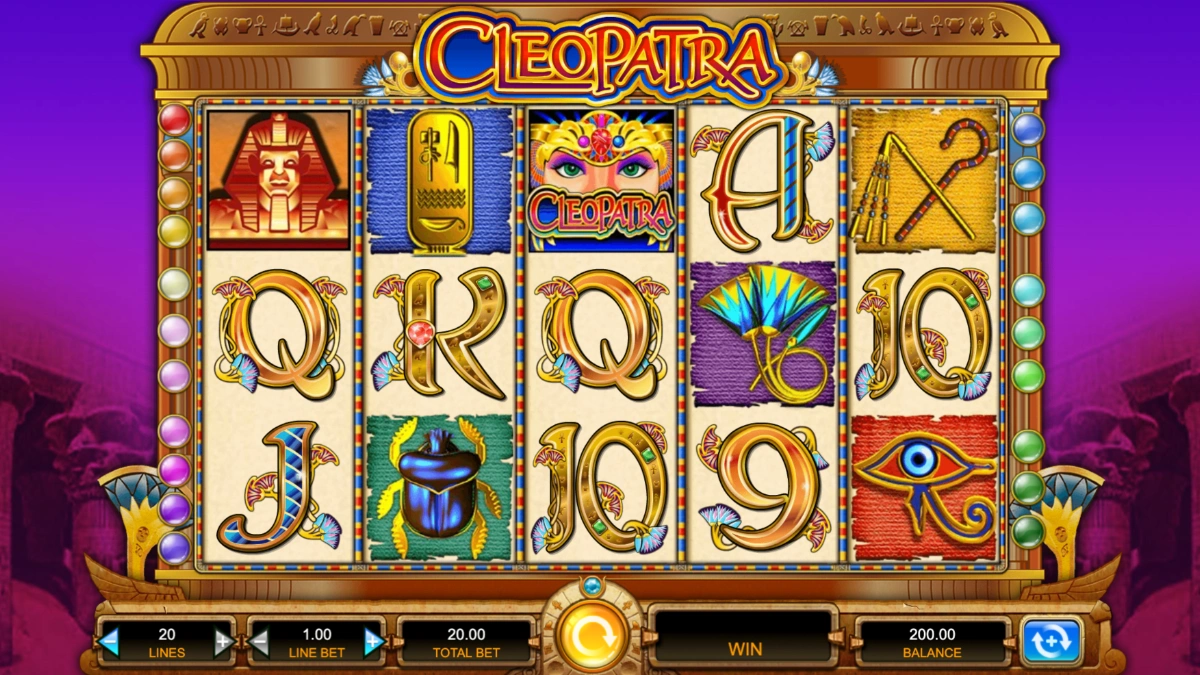
I played slots for years without understanding what actually happens behind the screen. Hot streak? Believed it. The machine is due? Obviously – it has to pay out eventually, right?
It wasn’t until I dug into the maths behind slot machines that everything clicked. Unfortunately, not in a good way. More in a ‘why did nobody explain this sooner’ kind of way.
How a slot machine is built
Whether it’s a classic three-reel slot or a modern Megaways machine with over 100,000 ways to win – the core principle has been the same for over 125 years. Charles Fey built the first mechanical slot machine in San Francisco back in 1899: the Liberty Bell. Three reels, five symbols, one payline. That basic blueprint hasn’t changed.
Every slot machine is made up of the same building blocks: the reels (usually three to six), the symbols on those reels, the paylines or ways to win, a paytable, and a bet field. You choose your stake, hit spin, the reels turn, and they land on random positions.
If matching symbols land on a payline, you win. That’s how simple it was in 1899 – and that’s how simple it still is at its core today.
The key difference from back then: the Liberty Bell relied on mechanics to create randomness. The reels were physical, and the stop positions were determined by springs and weights. In modern online slots, a computer programme handles that job – the random number generator.
The random number generator (RNG)
The RNG (Random Number Generator) is the invisible engine behind every slot machine. It runs constantly in the background, producing thousands of random numbers per second – even when nobody is playing.
The moment you hit the spin button, the slot grabs the current random number. That number determines where each individual reel stops. The result is locked in a fraction of a second – the spinning animation is pure window dressing.
Here’s a concrete example to show what’s happening behind the scenes. Imagine a simple slot with three reels, each with 64 positions. The RNG generates a number between one and 64 for each reel. The combination of those three numbers determines the outcome. That’s 64 × 64 × 64 = 262,144 possible combinations – per spin. On modern video slots with five reels and hundreds of symbols, that number climbs into the millions.
Whether the RNG is doing its job properly gets checked regularly. Independent testing labs like eCOGRA and iTech Labs audit the random number generators used by game providers. Without that certification, no developer gets a licence. If you’re playing at a regulated casino, you can trust that the randomness is genuine.
RTP: Why the slot always wins
Casinos aren’t charities. Every slot machine is designed to give the casino a long-term mathematical advantage. That advantage is called the house edge – the flip side of the Return to Player (RTP). Here’s a simplified example to show how it works:
Picture a slot with three reels. Each reel has three symbols – cherry, lemon, seven. That gives us 3 × 3 × 3 = 27 possible combinations. Only one of them is the winning combo: three cherries on the payline. Your odds of hitting it are 1 in 27.
If you bet $1 per spin, you invest $27 over 27 spins. For the casino to make money long-term, the payout for the cherry combo has to be less than $27. Let’s say the machine pays out $25. The maths looks like this:
RTP = payout ÷ total wagered = $25 ÷ $27 = 92.6%
House edge = 100% – 92.6% = 7.4%
So the casino earns 7.4 cents for every dollar wagered in the long run. Sounds tiny, but it adds up fast. At $1 per spin and 20 spins per minute, that’s roughly $1.48 per hour per player. Multiply that by thousands of players spinning at the same time – and you see why slots are the most profitable segment in any casino.
Volatility: Small wins or big hits
RTP tells you how much a slot pays back over time. Volatility tells you how it does it.
A low-volatility slot pays out small wins frequently. Your balance stays relatively stable, and you get regular returns. That’s great for relaxed sessions on a smaller budget.
A high-volatility slot pays out rarely – but when it does, it can hit hard. Long dry spells alternate with big payouts. That means you need more patience and a bigger bankroll to ride out the quiet stretches.
Two slots can have the exact same RTP but feel completely different to play. That’s why volatility matters just as much as the return rate when it comes to your personal experience.
I personally lean towards high-volatility slots, and I know it’s the more expensive way to play. But an 80-cent win on a 20-cent bet doesn’t do anything for me. I want the bonus round, the fat multiplier, the moment the balance explodes. I’ll happily sit through 40 dead spins for that. Sensible? Not really. More fun? For me, absolutely.
Most game developers label volatility as ‘low’, ‘medium’, or ‘high’ – sometimes ‘medium-high’. You rarely get exact numbers, but the category is enough to point you in the right direction.
Paylines and ways to win
Paylines determine where symbols need to land on the reels for a win to count. Classic slots had a single horizontal line across the middle. Today, paylines can run horizontally, vertically, diagonally, or in zigzag patterns across the reels.
The number of paylines varies wildly. Simple slots have five or 10 lines. More modern machines offer 20, 50, or even 243 fixed ways to win. Megaways slots take it further: the number of symbols per reel changes on every spin, which can create over 100,000 ways to win.
More paylines mean more chances per spin – but also a higher total stake. On a slot with 20 paylines at $0.01 per line, you’re betting $0.20 per spin. With 243 ways to win, the stake is usually fixed and often higher.
Tip
The paytable of any slot shows you how the paylines work and which combinations pay what. It’s worth a quick look – especially on slots you’re playing for the first time.
Three myths that cost you money
‘The machine is hot/cold.’
A slot that just paid out big isn’t ‘cold’ now. One that hasn’t hit in ages doesn’t ‘owe’ you a win. Every spin is independent. The RNG has no memory – the machine doesn’t know its own history.
‘Online slots can be rigged.’
The RNG is certified by independent testing labs before a slot is allowed to go live. Neither the casino nor the player can influence the outcome of a single spin.
‘If I play long enough, a win has to come.’
The law of large numbers means the RTP approaches its theoretical value over millions of spins. But ‘millions of spins’ refers to the total across all players – not your personal session. There’s no guarantee the next big hit falls within your next 100 spins.
Better play starts with better understanding
Slot machines are built so the casino wins in the long run. That’s not a conspiracy – it’s the business model. The RTP tells you what you’re paying for your entertainment, and the volatility tells you how that cost is spread across your session. Both are listed in the info menu of every slot, and the two minutes you spend checking are the best decision you can make before your first spin.
Pick slots with an RTP above 95% if you want to stretch your budget further. Decide whether you’d rather collect regular small wins with low volatility or chase the big moment with high volatility – both are perfectly fine, as long as your bankroll can handle it.
And set yourself a limit before every session. Not because anyone wants to kill your fun, but because slots are the most enjoyable when you don’t have to worry about where you’ll end up.
You can’t outsmart randomness. But with the right knowledge, you can deal with it a whole lot better.