


My first session on Gates of Olympus a few years ago was a disaster. 150 spins, no feature, balance in freefall. I was one click away from closing the tab – then three multipliers stacked in a single tumble round and suddenly I was sitting at $380.
From that moment on, I was hooked on the feeling. It took me much longer to realise that what happened wasn’t luck – it was maths. Volatility did exactly what it’s designed to do.
What volatility means in slots
The term volatility originally comes from finance. There, it describes how much a stock or fund price swings above and below its average. The bigger the swings, the higher the volatility – and the higher the risk.
Slots work on the exact same principle. Volatility tells you how wins are distributed across your session. A low-volatility slot pays out small amounts regularly. You win often, but rarely anything big. A high-volatility slot, on the other hand, makes you sweat first – and then rewards you with hits worth many times your stake.
Two players, one budget, two completely different nights
Here’s an example: Player A spins a low-volatility slot. After 200 spins, he’s still got $85 in his account. Small wins kept trickling in, giving back most of his stakes. A quiet evening.
Player B spins a high-volatility slot. After 200 spins, his balance is down to $20. Almost nothing came back. And then – boom. The free spins round hits, a multiplier stacks up, and suddenly there’s $450 on the screen. That’s high volatility in action.
Neither of them played ‘better’. They simply chose slots with different risk profiles.
The three volatility levels
Unlike RTP, which you can look up as a clear percentage, there’s no standardised value for volatility. The labels ‘high’, ‘medium’, and ‘low’ are classifications set by the game developers, not exact numbers.
But there’s still real maths behind it. The technical basis for volatility is the standard deviation of payouts across a large number of spins. In practice, the developer simulates millions of rounds on a slot. Each round’s result gets recorded – win or loss, and by how much. Then they calculate how far each individual result strays from the average.
Think of it this way: on a low-volatility slot, almost all results cluster tightly around the average. You win a bit more here, a bit less there, but the range stays narrow. On a high-volatility slot, the range is massive. Most rounds return nothing, and then a single round lands a win that drags the average way up.
Some providers use an internal Volatility Index. Pragmatic Play, for example, uses a scale of 1 to 5, where Gates of Olympus scores a full 5/5. These values aren’t calculated the same way across all providers, though, and they’re not always made public.
Low volatility – the slow and steady lane
Low-volatility slots are the marathon runners of the slot world. They pay out frequently, though the wins tend to be modest. Your balance moves in a tight corridor – no steep climbs, no sudden drops.
Typical traits: The maximum win usually sits below 1,000x your stake. Bonus features are few or fairly straightforward. In return, you’ll see a winning combination land roughly every second or third spin.
Who are these slots for? If you’re playing on a smaller budget, want a relaxed evening without major surprises, or you’re just getting started with online slots, this is your lane. They’re also the smarter pick when you’re working through bonus wagering requirements – your balance simply lasts longer.
That said, there’s a trade-off worth being honest about: if your goal is a big hit, low volatility is probably a waste of time. Your balance holds up nicely, but you’re moving in a corridor where nothing really exciting happens. Dropping $50 into a low-volatility slot and walking away with $42 after two hours is safe, sure – but it’s not why most of us spin.
Medium volatility – the sweet spot
This is where it gets more interesting. Medium-volatility slots hit the sweet spot between regular wins and the occasional big payout. The dry spells are longer than with low volatility, but nowhere near as brutal as the high-risk end.
Typical traits: The maximum win usually falls between 1,000x and 10,000x your stake. Bonus features are more varied – free spins, multipliers, and special symbols add real dynamics to the gameplay. You win less frequently than on low-volatility slots, but each individual hit feels noticeably bigger.
Who are these slots for? If you’ve moved past the beginner phase and want more action without going all-in on your entire budget. Medium volatility is where most players end up long-term – and for good reason.
High volatility – the thrill mode
This is where it gets real. High-volatility slots can wipe your balance in minutes – or deliver a win that changes everything. The dry spells are long and sometimes frustrating. But when the bonus round hits and the multipliers start stacking, you understand why millions of players chase exactly this rush.
Typical traits: The maximum win ranges from 5,000x to well over 50,000x your stake. Bonus features are complex – cumulative multipliers, expanding symbols, and mechanics that feed off each other. The hit rate in the base game is low – the real action happens in the free spins rounds.
Who are these slots for? If you’re deliberately taking on more risk, have enough budget for longer sessions, and can handle walking away from a session with nothing to show for it. High-volatility slots aren’t for players who get twitchy after 10 dead spins.
Volatility vs. RTP
A common mistake: players treat volatility and RTP (Return to Player) as the same thing. They measure completely different aspects of a slot.
RTP tells you what share of all bets flows back to players over the long run. A slot with 96% RTP pays out an average of $96 for every $100 wagered across millions of spins. RTP answers the question: how much do I keep over time? Volatility answers: how wild is the ride getting there?
Two slots can both have a 96% RTP and still play completely differently. One gives you steady small returns across 1,000 spins. The other eats through your balance for 800 spins and then drops everything in a single free spins round. Same RTP, completely different experience.
That’s why you need both values to actually evaluate a slot. RTP alone only tells half the story. And here’s the thing – I’ve played three sessions back to back on a 98% RTP slot and walked away with less than I made in a single free spins round on Razor Shark at 96.7%. RTP is a long-term figure. Your session isn’t.
How to identify a slot’s volatility yourself
Not every slot displays its volatility openly. Some developers are transparent, others leave it to you to figure out. Here are the clues that help you gauge volatility before you put real money on the line:
Check the slot’s info page: Most modern slots have an information or help menu built right into the game. Pragmatic Play, for example, shows a volatility scale with lightning bolt symbols. Play’n GO and NetEnt often list the volatility in the game description. This is always your first stop.
Look at the maximum win: If a slot lists a max win of 500x, the volatility is almost certainly low. At 5,000x and above, you’re nearly always in high-volatility territory. The logic: a slot that allows massive wins has to balance that out somewhere – and it does so by paying out less or nothing on most spins.
Analyse the paytable: If there’s a huge gap between the lowest and highest symbol payouts, that points to high volatility. On low-volatility slots, the payout values for different symbols sit much closer together.
Use the demo mode: Nearly every slot can be tested for free in demo mode. Spin 100 to 200 rounds and watch how your virtual balance behaves. If it barely moves, the volatility is low. If it drops sharply and then spikes back up, it’s high. It’s not scientific, but it gives you a solid gut feeling.
What volatility can’t do
As useful as volatility is for orientation, it has clear limits. Volatility is a statistical statement about millions of spins. It says nothing about your next round. You can go 50 rounds without a win on a low-volatility slot, and you can trigger the bonus round within the first 10 spins on a high-volatility one. Statistics aren’t promises.
Volatility also tells you nothing about a slot’s quality or entertainment value. A low-volatility slot can be just as well-designed, just as entertaining, and just as rewarding as a high-volatility one. It’s simply a different kind of experience.
And one thing to always keep in mind: regardless of the volatility, the house edge remains. A 96% RTP means that over time, you lose 4% of your stakes. Volatility only changes how that loss is distributed across your individual sessions.
The difference between volatility and variance
Volatility and variance are used almost interchangeably when it comes to slots – and in everyday terms, that’s perfectly fine. But if you want the precise distinction: variance is a statistical measure of how far individual results deviate from the average. Volatility is the square root of that variance – in other words, the standard deviation.
Sounds complicated, but the core idea is simple: variance measures the spread of results as a number. Volatility makes that number tangible because it’s expressed in the same unit as the results themselves.
A coin flip makes the difference clear. You bet on heads or tails and get double your money on a correct guess. The risk is low, the swings are small – low volatility. Now imagine you’re betting on a single number in roulette. You lose 36 times in a row, then your number hits and you get 36x back. The average return can be similar, but the swings are extreme – high volatility.
Which volatility type are you?
Playing on a smaller budget and want to spin for as long as possible? Stick to low-volatility slots like Starburst or Blood Suckers. Your balance lasts longer, and the session stays relaxed.
Want more action without going all-in? Medium volatility is your territory. Slots like Eye of Horus or Gonzo’s Quest deliver the middle ground between regular wins and the occasional highlight.
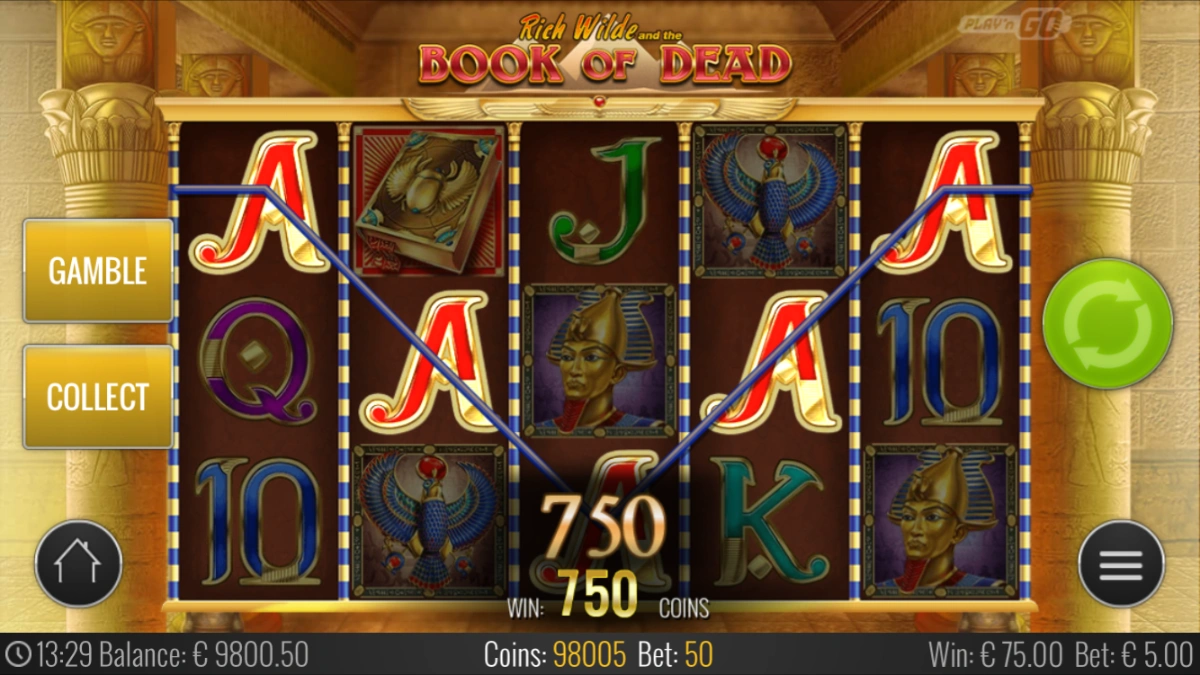
Got the budget and you’re chasing the big hit? Then Book of Dead, Gates of Olympus, or Razor Shark are the way to go. Just be aware: the dry spells are part of the deal.
At the end of the day, there’s no volatility that’s ‘better’ – it’s about which one matches your budget, your patience, and your appetite for risk. Once you’ve understood that, you’ll make smarter decisions at the reels.
At PlayerChecked, you’ll find the volatility rating listed right alongside every slot, so you know exactly what you’re getting into before your first spin.